2028
2028In the context of the rapid development of modern science and technology, the application of linear integrated circuits not only exists widely in daily electronic products but also plays an indispensable role in scientific research and industrial fields. Therefore, a comprehensive understanding of linear integrated circuits is necessary.
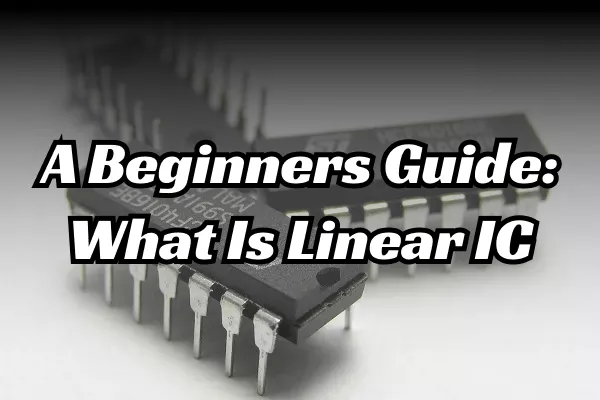
This article will include three questions: what is meant by linear ic, how does it work, and what are its main types and practical applications in various fields?
It helps to understand the foundation of modern electronic technology and how it drives continuous innovation and progress in technology.
Here comes the answer: The linear ic is a kind of integrated circuit based on the amplifier, which has good linear characteristics and can realize complex circuit functions.
The linear ic is widely used in communication, which can provide amplification, filtering, modulation, demodulation, detection, transceiver, and integrate multiple functions.
In the early 1960s, when the first integrated amplifiers were made from semiconductor silicon wafers, the word "linear" was used to indicate that the amplifier's response to the input signal usually showed a linear relationship.
Later, this circuit includes many nonlinear circuits such as oscillators, timers, and data converters, and circuits that combine digital and linear functions. Because the information processed involves continuously changing physical quantities (analog quantities), people also call this circuit an analog integrated circuit.
Linear and nonlinear integrated circuits (ICs) differ in their response to input signals and the relationship between input and output.
Linear ICs, also known as analog ICs, exhibit a linear relationship between their input and output signals. When plotted on a graph, the output versus input signal forms a straight line. Linear ICs are commonly used for amplification, attenuation, voltage regulation, and signal comparison.
Nonlinear ICs, on the other hand, do not have a linear relationship between input and output signals. Their input-output characteristics are more complex and can be represented by curved lines or other non-proportional patterns on a graph. Nonlinear ICs perform operations that manipulate signals in a non-proportional way, providing a wide range of functionalities.
Imagine a dimmer switch for a light bulb. A linear relationship would be like the brightness increasing steadily as you turn the knob. A nonlinear relationship would be like the brightness increasing slowly at first, then rapidly becoming very bright in the last part of the knob's turn.
Linear ics are electronic devices designed to process and manipulate continuous analog signals. Here are some key characteristics of linear ic:
Linear ics find a wide range of applications in various electronic systems due to their ability to process and manipulate continuous analog signals. Here are four concrete applications of linear ics:
Audio Amplification
Linear ics, especially operational amplifiers (op-amps), are extensively used in audio amplification systems.
They amplify low-level audio signals from sources such as microphones or musical instruments, providing the necessary gain to drive speakers or headphones.
Audio amplifiers with linear ics are found in audio equipment like amplifiers, preamplifiers, and audio receivers.
Voltage Regulation
Linear voltage regulators, another type of linear IC, are employed to maintain a stable output voltage irrespective of changes in the input voltage or load conditions.
These are commonly used in power supply circuits to ensure a consistent and regulated voltage supply to other electronic components.
Linear voltage regulators are vital in applications where a steady and precise power source is required, such as in microcontrollers, analog sensors, and other sensitive electronics.
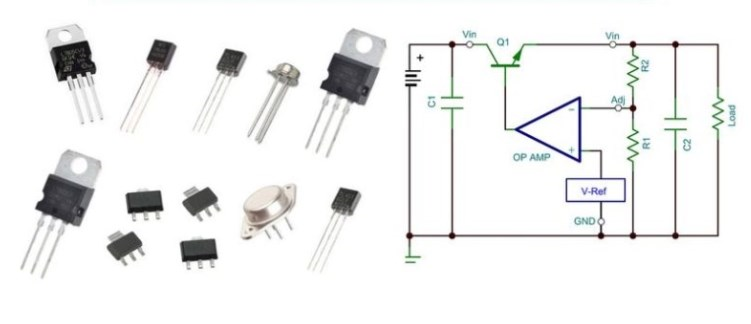
Image Source: How To Electronics
Instrumentation and Measurement Systems
Linear ics are crucial in instrumentation and measurement systems where precision and accuracy are paramount.
Operational amplifiers play a key role in signal conditioning, amplification, and filtering in sensors and measurement devices.
These ICs contribute to the accuracy and reliability of measurements in fields like industrial automation, scientific research, and medical instrumentation.
Communication Systems
Linear ics are widely used in communication systems for signal processing, modulation, and demodulation.
In radio-frequency (RF) communication, mixers and frequency modulators/demodulators based on linear ICs are essential.
Additionally, operational amplifiers are used in the design of filters and amplifiers within communication circuits.
Linear ics contribute to the effective processing and transmission of signals in applications such as mobile communication, satellite communication, and broadcasting.
Here are six commonly used linear integrated circuits up to 2024:
Operational Amplifiers (Op-Amps)
LM741: A classic, widely used general-purpose operational amplifier.
TL071/TL072/TL074: Low-noise JFET-input operational amplifiers, suitable for various applications.
OPA2134: High-performance audio operational amplifier, often used in audio applications.
Voltage Regulators
LM7805/LM7812/LM317: Series of fixed and adjustable linear voltage regulators providing stable output voltages for power supplies.
LM338: Adjustable voltage regulator capable of providing higher currents.
Comparators
LM311: High-speed voltage comparator widely used in various applications, including pulse-width modulation (PWM) and oscillators.
Instrumentation Amplifiers
AD620: Low-cost, high-precision instrumentation amplifier used in data acquisition and sensor applications.
Current Sense Amplifiers
INA219: A current shunt monitor with I2C interface, used for accurate current measurement in various applications.
Analog Multipliers/Dividers
AD633: Four-quadrant analog multiplier/divider with applications in modulation and demodulation circuits, signal processing, and control systems.
The primary distinction between linear and nonlinear integrated circuits lies in how they process signals and respond to changes in input. Let's break down the key differences:
Linear IC
Nonlinear IC
Applications
In conclusion, understanding linear ics is essential for mastering foundational principles in electronic engineering. It enables precise signal processing, facilitates the design of reliable electronic systems, and serves as a cornerstone for technological innovation and advancement.
Hopefully, you will get a more comprehensive understanding of linear ic after reading this article.

Disclaimer: The views and opinions expressed by individual authors or forum participants on this website do not represent the views and opinions of Chipsmall, nor do they represent Chipsmall's official policy.

share this blog to:


Chipsmall will provide you real-time product updates, limited-time deals.


Copyright © 2004-2026 Chipsmall.com All Rights Reserved.

Feedback
We appreciate your engagement with Chipsmall's products and services. Your opinion matters to us! Kindly take a moment to complete the form below. Your valuable feedback ensures that we consistently deliver the exceptional service you deserve. Thank you for being part of our journey towards excellence.