774
774In modern automotive electronic systems, the vehicle speed sensor (VSS) plays a pivotal role. A malfunctioning speed sensor may significantly impair driving performance, even potentially create safety hazards.
Consequently, mastering diagnostic and troubleshooting techniques for VSS failures has become essential knowledge for both vehicle owners and automotive technicians.
This article provides an in-depth examination of common VSS failure symptoms, systematic diagnostic approaches, and professional repair methodologies to effectively address these critical issues.
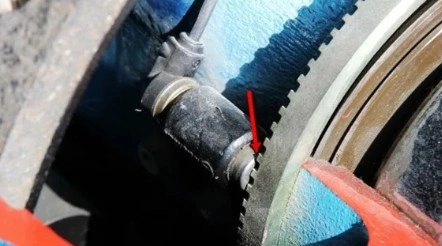
The Vehicle Speed Sensor (VSS) is a small electrical device that measures the speed and movement of a vehicle. The VSS can be either magnetic or hall-effect sensor.
The VSS is attached to the vehicle's Engine Control Module (ECM) or Powertrain Control Module (PCM) and gives data on the vehicle's speed and movement.
The vss sensor is usually installed on the drive axle or transmission housing. The vss signal cable is usually installed in a shielded jacket to eliminate electromagnetic and radio frequency interference generated by high-voltage electric wires, car phones or other electronic equipment, to ensure that electronic communications are not interrupted and prevent driving performance from deteriorating or other problems.
According to the working principle and installation location, vehicle speed sensors are mainly divided into the following types:
Using the principle of electromagnetic induction, when the gear (or magnetic ring) rotates, the magnetic flux change in the sensor generates an alternating voltage signal, and the frequency is proportional to the speed.
Features:
Application: Traditional ABS system, old speedometer, gearbox input/output shaft speed detection.

Detect the rotation of gears or magnetic rings through the Hall effect and output digital pulse signals (square waves).
Features:
Application: Modern ABS, electronic speedometer, transmission control, etc.
Using light-emitting diodes (LEDs) and photosensitive elements, a pulse signal is generated by detecting the rotation of gears or slit disks to interrupt the light path.
Features:
Application: Crankshaft/camshaft position sensors for some older models, and a few vehicle speed detection.
If the vehicle speed sensor (VSS) fails, it will affect multiple systems of the vehicle, which may lead to reduced driving performance, increased safety risks, and even damage to other components. The following are the specific consequences of VSS failure:
Engine problems: unstable idle speed, weak acceleration, possible flameout.
Transmission abnormalities: gear shifting, lock failure, and even limp mode.
Speedometer failure: inaccurate display or zero, odometer may stop counting.
Safety system restrictions: ABS/ESP may be triggered by mistake, cruise control failure.
Long-term damage: increased fuel consumption, transmission wear, affecting annual inspection.
VSS Sensor failure can affect engine control, transmission shifting, ABS/ESP systems, etc., causing various abnormalities in the vehicle. The following are typical fault manifestations and their causes:
Possible causes:
The abnormal VSS signal causes the ECU (engine control unit) to be unable to accurately judge the vehicle status, affecting the idle control strategy.
The automatic transmission incorrectly adjusts the torque converter lock state due to the loss of the vehicle speed signal, indirectly affecting the engine load.
Typical manifestations:
During cold start or parking, the engine speed fluctuates, even accompanied by slight shaking.
Possible causes:
When the VSS signal is interrupted or wrong, the ECU may misjudge that the vehicle has stopped (if it is still sliding), resulting in incorrect injection or ignition strategies.
The automatic transmission delays downshifting or abnormally disengages the locking clutch due to the loss of the vehicle speed signal, causing power interruption.
Typical manifestations:
When following a vehicle at low speed or before parking, the vehicle suddenly "rushes" or even stalls, and needs to be re-ignited.
Possible causes:
ECU relies on vehicle speed signals to optimize air-fuel ratio and ignition timing. Signal abnormalities may cause misregulation of the mixture.
Some models will trigger "limp home" (Limphome) due to VSS failure, limiting engine power output.
Typical manifestations:
Acceleration is weak when the accelerator is pressed, the speed rises slowly, and overtaking is difficult.
Possible causes:
VSS directly drives the mechanical speedometer or provides signals to the instrument ECU. When a fault occurs, the pointer may become stuck, jump, or return to zero.
If the vehicle uses a wheel speed sensor (WSS) to indirectly calculate the speed, a communication failure between the ABS module and the instrument may also cause this problem.
Typical manifestations:
The actual vehicle speed is 60km/h, and the instrument displays 0km/h or fluctuates; some models will stop counting with the odometer.
Possible reasons:
When the ECU detects that the VSS signal is lost or the signal is unreasonable (such as the vehicle speed and wheel speed are inconsistent), the MIL light (fault indicator light) is turned on.
Common fault codes:
P0500 (vehicle speed sensor no signal)
P0501 (vehicle speed signal range/performance problem)
U0121 (communication with the ABS module is lost, affecting vehicle speed data)

Here’s the comparison between RPM Sensor and Speed Sensor (VSS) in a clear English table format:
|
Aspect |
RPM Sensor (Revolution Sensor) |
Speed Sensor (VSS - Vehicle Speed Sensor) |
|
Measures |
Engine crankshaft/camshaft RPM (revolutions per minute) |
Vehicle travel speed (km/h or mph) |
|
Primary Function |
Monitors engine speed for ignition, fuel injection, and ECU control |
Provides speed data for speedometer, transmission shifting, ABS/ESP, and cruise control |
|
Location |
Near engine flywheel, camshaft, or distributor |
Transmission output shaft, differential, or wheel hub |
|
Signal Usage |
Engine management (e.g., fuel/spark timing) |
Speed display, gear shifting logic, stability control |
|
Common Types |
Magnetic (inductive), Hall Effect, Optical |
Magnetic, Hall Effect, Magnetoresistive (MR) |
|
Failure Symptoms |
Engine no-start, misfires, erratic idle |
Incorrect speedometer reading, transmission issues, ABS/ESP errors, cruise control failure. |
RPM Sensor: Measures rotational speed (engine/component RPM).
VSS: Measures vehicle travel speed (km/h or mph).
RPM Sensor: Critical for engine operation (fuel injection, ignition timing).
VSS: Affects speed-related functions (transmission, dashboard, safety systems).
RPM Sensor Failure: Engine may not start or runs poorly.
VSS Failure: Speedometer malfunctions, gearshift problems, but engine may still run.

So where should we find the best vehicle speed sensors? These top manufacturers may meet your needs.
Country: Germany
Features: The world's largest automotive parts supplier, VSS products cover various types such as Hall type and magnetoelectric type, and are suitable for multi-brand models such as German, Japanese, and American.
Country: Germany
Features: Known for its high-precision magnetoresistive (MR) sensors, integrated ABS/ESP systems, widely used in modern smart cars.
Country: Japan
Features: A core supplier of Japanese cars, VSS is known for its reliability and durability, especially for hybrid models.
As a trusted distributor of high-quality automotive sensors, Chipsmall proudly partners with Bosch, Denso, and other global leaders to bring you reliable RPM sensors, speed sensors (VSS), ABS/wheel speed sensors, and more.


Disclaimer: The views and opinions expressed by individual authors or forum participants on this website do not represent the views and opinions of Chipsmall, nor do they represent Chipsmall's official policy.

share this blog to:


Chipsmall will provide you real-time product updates, limited-time deals.


Copyright © 2004-2026 Chipsmall.com All Rights Reserved.

Feedback
We appreciate your engagement with Chipsmall's products and services. Your opinion matters to us! Kindly take a moment to complete the form below. Your valuable feedback ensures that we consistently deliver the exceptional service you deserve. Thank you for being part of our journey towards excellence.