513
513RS-232C not only defines the beginning of the age of computing but also the most innovative time of it, allowing in those days’ computers to communicate with printers, modems, and other peripherals in real time. Presently, it is more extensively used in places where stability and long-term compatibility is more conclusive than the high data speeds.
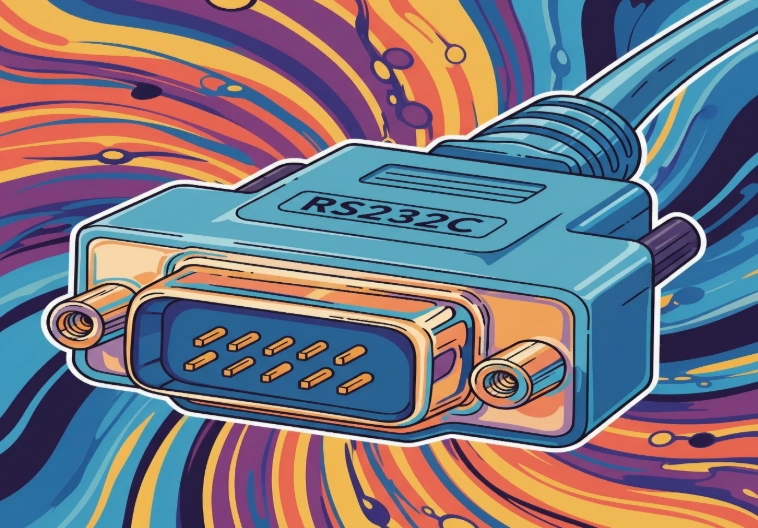
What is RS-232C?
RS-232C is a well-known standard of serial communication which is used for the point-to-point distribution of data that is exchanged between two devices. Named also the "Recommended Standard 232 Revision C", RS-232C specifies a serial interface for data transfer of binary code between Data Terminal Equipment (DTE) such as computers and Data Communication Equipment (DCE) like modems. Conceived by the Electronic Industries Association (EIA) in the 1960s, RS-232C became the most pervasive serial communication interface in computers and industrial devices.
The RS-232C standard is defined by the usage of voltage-based signaling and the common connectors of DB-25 and DB-9. Its key attribute is the bidirectional transmission capability that allows for simultaneous sending and receiving of data between devices.
In industrial automation, embedded systems, and legacy equipment, despite the introduction of modern technologies like USB and Ethernet, RS-232C is still seen to be very useful due to its reliability and simplicity.
The RS-232C asynchronous serial communication is majorly employed for data transmission and that is why the communicating devices are not in sync with a common clock signal. The way of communication here is that data bits are broken down into their bits, and each of these bits is then surrounded by the required start and stop bits. A typical example of one transmission would be: one start bit, five to eight data bits, an optional parity bit, and finally, one to two stop bits. Besides the data signals, voltages are also one of the components of RS-232C communication. The voltage between -3V and -15V refers to the logical level "1" (mark) and the voltage within +3V to +15V implies the logical level "0" (space). The noise immunity of the communication system employing this TTL logic inverts the signals is commendable. Numerous signal lines are required in the communication and these signals are the logic levels they stand for.
TXD (Transmit Data): Departs the data that is sent.
RXD (Receive Data): Collects those data that come into it.
RTS/CTS (Request to Send / Clear to Send): It is a requirement for the control of hardware operations.
DTR/DSR (Data Terminal Ready / Data Set Ready): It represents the status.
GND (Ground): Electrical standards often used as a.
Certainly, the set of baud rates is well-suited for different scenarios, and a speed of 9600 bps has become very popular. By following practical conditions, it's achievable to have a transmission speed of up to 115200 bps via RS-232C, but it is mostly due to the cable quality and length. All said and done the range, over which transmission is possible, is still quite small - the distance is not beyond 50 feet (15 meters). Otherwise, for instance, a longer cable run will undergo signal loss unless protective couplers, etc., are used together with the reduction of the speed substantially. In the case of RS-232C, the system operates in an asynchronous manner where each character is individually framed. This allows for data transmission without the introduction of any errors, and thus this method is most suitable for applications without the need for absolute accuracy in time. One typical example of this kind of application is the synchronization of different devices where a terminal interface is established or sensors are used for data logging.
RS-232C has sustained its importance in industrial and legacy systems due to several reasons. One of the strongest sides is the simplicity, reliability, and the need for minimum hardware. It has no reliance on complicated drivers or network stacks. This makes it simpler for the industry to use in embedded systems.
Simple Implementation: Requires minimum hardware and software to operate.
Broad Compatibility: Eased by microcontrollers, industrial devices, and diagnostic tools everywhere.
Reliable for Short Distances: Is effective when it is used at short distances with a small amount of noise.
No Need for Networking Hardware: Ideal for direct device-to-device communication.
Despite these benefits, RS-232C does have limitations, especially when compared to newer technologies like USB or Ethernet.
Limited Speed: The maximum speeds are lower than those required by today's standards.
Short Range: Most cables have about 50 feet of length as a standard.
One-to-One Only: Special hardware is necessary in case you need to connect several devices at the same time using a single cable.
Bulky Connectors: The sizes of the DB-25 and DB-9 ports are significantly bigger compared to new interfaces.
In industrial automation, these limitations are often acceptable because devices operate in fixed environments with short distances and low data volume.
The RS-232 standard was first introduced in 1962, but it lacked specific electrical and mechanical definitions, which led to inconsistent implementations. RS-232C was released in 1969 to address these shortcomings.
RS-232C established clear guidelines for voltage levels, pin assignments, and connector types. It became the most adopted version of the standard. While newer revisions exist (like RS-232D and RS-232E), RS-232C remains the most widely referenced.
Electrical Specifications: RS-232C represents the voltage levels at which the logical states are determined
Connector Types: Innovated the standard DB-25 and DB-9 connectors.
Wider Adoption: RS-232C gathered quick acceptance and thus extended itself to an industry standard status. In practice, most modern devices that claim RS-232 compatibility follow the RS-232C specification, even if they don’t explicitly label it as such.

In the field of aviation, RS-232C can still be found in configuring and testing of navigation gadgets. Apart from RS-485, the healthcare industry has not given up on RS-232C for patient monitors and infusion pumps that provide readings to the central system. Besides, this protocol is also widespread in weather and environmental monitoring equipment, radio transceivers, and power grid management systems.
Certainly, in the sphere of hobbyist and DIY electronics, RS-232C is the dominant standard for the connection and communication of microcontrollers with computers during data acquisition. The combination of Arduino boards and Raspberry Pi systems through RS-232C is made possible by
level shifters or USB adapters. One of the most important applications of RS-232C that is not quite known to many is its use in the server room environment. Network switches, firewalls, and routers still have a serial console port for system administrators to execute configurations and resolve issues on the devices even without network connectivity.
RS-232C may still be in use, but the numerous USB, Ethernet, and wireless standards are the most widely used in the consumer and business markets. These newer standards provide multiple advantages such as faster speeds, improved error correction, and support for the communication system across different devices. On the one hand, RS-232C is not less popular and is the technology that is preferred in certain fields. The main reasons for this are its reliability, ease of use, and the fact that it does not require drivers. In this relatively faster world, the nature of uptime and stability in the operation has pushed the simple connection mechanism to new levels of necessity. The decision of going with RS-232C or the current and more appropriate devices is mostly driven by the use case. RS-232C is already a lost cause in the age where networks comprise numerous devices and the turnover rate is high. Nevertheless, for straightforward, one-to-one installations in uncontrolled or industrial environments, it still excels.
RS-232C has to be one of, if not the most commonly used serial communication standards in the history of serial communication standardization. Starting from its very early stages, such as in the era of the creation of first computer modems, and continuing to the role it plays in industrial automation today, this serial communication standard has been an unstoppable force for withstanding changes. The fact that the use of RS-232C is limited to a low rate and it isn't scalable apart from the disadvantages it has also made it the benchmark in terms of reliability, simplicity, and universality, which are the most convenient characteristics in the field of communication. The experts in this protocol that later turned into the most conventional one are still needed, at least, in the businesses that use such systems. The knowledge of RS-232C is always of great value, irrespective of the fact if you have to fix a traditional machine from the past or put in place a new embedded device in 2025. Its legacy is more about being reliable than old.
Q: What devices still use RS-232C?
Industrial machines, lab instruments, barcode scanners, point-of-sale terminals, and networking hardware use RS-232C in order to enable the solid and secure communication.
Q: Can I connect RS-232C devices to a modern computer?
Yes, most modern PCs don't have built-in serial ports, so they need to use USB-to-serial adapters which are available and popular.
Q: Is RS-232C faster than USB?
No, USB provides a significantly higher data transfer rate meaning that it is the most appropriate option for RS-232C.
Q: Can RS-232C be used over long distances?
However, RS-422 or RS-485 protocols are the best choice when the distance is long.
Q: Is it safe to plug and unplug RS-232C cables while powered on?
That's not the best idea. The RS-232C interface is not designed for hot-swapping and if attempts of doing so are made it can lead to some hardware getting damaged.
Q: Can RS-232C connect more than two devices?
No. RS-232C is good for only one-to-one connections. However, for applications that include several devices, it is best to either use RS-485 or a protocol that is based on an Ethernet network.
Q: What baud rate is best for RS-232C?
Possible cable quality, 9600 bps is commonly used, but speeds as high as 115200 bps are also achievable.
Q:DoesRS-232C support error checking?
Parity bits is a simple method of error detection. It can, however, not be used to correct errors

Disclaimer: The views and opinions expressed by individual authors or forum participants on this website do not represent the views and opinions of Chipsmall, nor do they represent Chipsmall's official policy.

share this blog to:


Chipsmall will provide you real-time product updates, limited-time deals.


Copyright © 2004-2026 Chipsmall.com All Rights Reserved.

Feedback
We appreciate your engagement with Chipsmall's products and services. Your opinion matters to us! Kindly take a moment to complete the form below. Your valuable feedback ensures that we consistently deliver the exceptional service you deserve. Thank you for being part of our journey towards excellence.