1724
1724In modern electronics, magnetic sensing plays a vital role in automation, security, and medical technologies. Among the many components used for this purpose, the reed switch stands out for its simplicity, reliability, and cost-effectiveness. Despite being a technology developed decades ago, reed switches remain widely used due to their versatility in detecting magnetic fields and enabling non-contact switching.
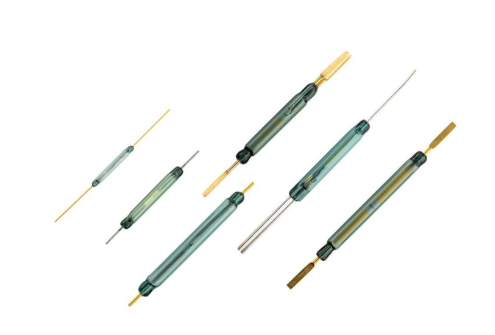
A reed switch is an electromechanical device consisting of two ferromagnetic metal reeds sealed within a small glass tube. When exposed to a magnetic field, the reeds either attract or repel, closing or opening the circuit.
Key features include:
Normally open or normally closed configurations
Hermetically sealed structure for long life and protection against environmental factors
No power consumption when idle
Compact size for integration into modern electronic designs

Reed switches offer several advantages over Hall-effect sensors and mechanical switches in certain applications:
No standby power requirement (ideal for battery-powered devices)
High isolation between control and signal circuits
Durability due to sealed contacts
Ability to operate in harsh environments such as moisture, dust, or gas exposure
Low cost compared to semiconductor alternatives
These benefits make reed switches a preferred choice where simplicity, robustness, and low energy consumption are critical.
Reed switches are commonly found in door and window sensors for burglar alarms. When a magnet is attached to a door frame and the reed switch is placed on the moving door, the system can detect if the door is opened or closed.
In medical equipment such as infusion pumps or pill dispensers, reed switches ensure safety and accurate monitoring by detecting lid closures and magnetic triggers without requiring direct contact.
Reed switches are used for gear position sensing, brake fluid level detection, and seatbelt monitoring. Their ability to function reliably in vibration-prone and high-temperature environments makes them well-suited for vehicles.
Reed switches are integrated into laptops (lid close detection), smartphones (accessories like flip covers), and smart appliances. Their non-contact operation helps reduce wear and extend product lifespan.
Machines often use reed switches in pneumatic cylinders and robotic arms to provide position feedback. Because reed switches are sealed, they operate reliably even in environments filled with oil, dust, or chemicals.
Utility meters employ reed switches to sense magnetic fields and provide pulse outputs, which can be used for energy or water consumption monitoring.
Extremely low power consumption
Simple and robust design
Long operational life (billions of switching cycles)
Immunity to environmental contaminants due to sealed contacts
Slower response time compared to semiconductor magnetic sensors
Limited switching current and voltage ratings
Mechanical fatigue possible in very high-frequency applications
Engineers often choose between reed switches and solid-state sensors depending on the balance of cost, durability, and performance requirements.
While solid-state sensors like Hall-effect ICs are growing in popularity, reed switches continue to evolve. Manufacturers are producing miniaturized reed switches for IoT devices, high-voltage variants for smart grids, and rugged designs for aerospace and defense.
With the ongoing expansion of smart homes, electric vehicles, and medical devices, reed switches will remain relevant, particularly in applications where low power consumption, environmental isolation, and cost efficiency are key.
Reed switches may seem like a simple, old technology, but their importance in magnetic sensing applications remains undeniable. From home security and consumer electronics to medical devices and industrial systems, reed switches deliver reliable, low-cost, and energy-efficient solutions.
By combining durability with versatility, reed switches continue to serve as essential components in both legacy systems and next-generation smart technologies.

Disclaimer: The views and opinions expressed by individual authors or forum participants on this website do not represent the views and opinions of Chipsmall, nor do they represent Chipsmall's official policy.

share this blog to:


Chipsmall will provide you real-time product updates, limited-time deals.


Copyright © 2004-2026 Chipsmall.com All Rights Reserved.

Feedback
We appreciate your engagement with Chipsmall's products and services. Your opinion matters to us! Kindly take a moment to complete the form below. Your valuable feedback ensures that we consistently deliver the exceptional service you deserve. Thank you for being part of our journey towards excellence.