495
495In the world of electronic instrumentation, accuracy is everything. Whether it is a digital multimeter, a medical device, or an aerospace navigation system, the ability to measure signals precisely depends heavily on one component: the precision resistor. Unlike general-purpose resistors, precision resistors are engineered to provide exceptionally accurate resistance values with tight tolerances and low temperature coefficients. This makes them indispensable in sensitive measurement and control systems.
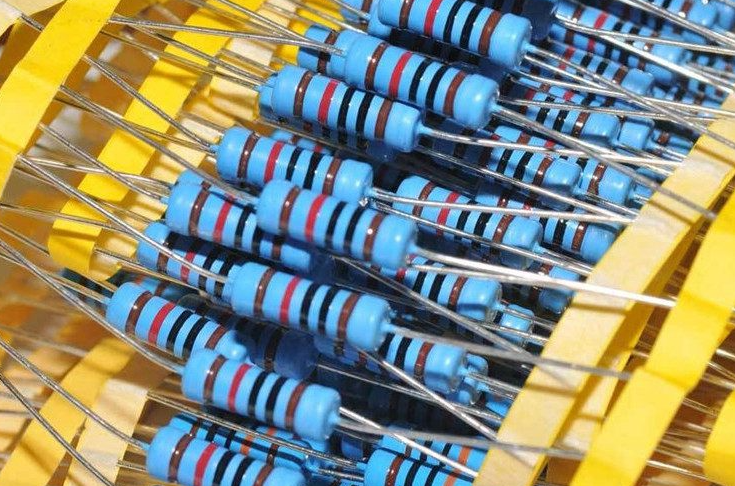
A precision resistor is a specially designed resistor with a very low tolerance (typically ±0.1%, ±0.01%, or even lower) compared to standard resistors (±1% or ±5%). They are built to ensure stability under varying environmental conditions, making them suitable for instrumentation, calibration, and feedback circuits.
Key characteristics include:
Tight Tolerance: Ensures minimal deviation from the nominal resistance value.
Low Temperature Coefficient (TCR): Resistance remains stable across temperature variations.
High Stability Over Time: Minimal drift ensures reliability in long-term measurements.
Low Noise: Important for high-resolution analog circuits.
Instrumentation systems often deal with very small signals that need to be measured, amplified, or compared. Inaccuracies introduced by resistors can lead to incorrect readings, device malfunction, or even system failure. Precision resistors provide the accuracy and repeatability required for:
Voltage and Current Measurement: Accurate sense resistors ensure reliable data in multimeters and oscilloscopes.
Bridge Circuits: Used in Wheatstone bridges for strain gauges, pressure sensors, and temperature sensors.
Amplifier Feedback Networks: Maintain precise gain levels in operational amplifiers.
Reference Standards: Act as benchmarks for calibration equipment.
Precision resistors are manufactured using advanced materials and processes to achieve the required stability. Common types include:
Metal Film Precision Resistors
Most widely used in instrumentation.
Offer low noise, tight tolerance, and low TCR.
Wire-Wound Precision Resistors
Extremely accurate and stable.
Suitable for high-power or high-precision applications.
Drawback: limited in high-frequency use due to inductance.
Foil Precision Resistors
Highest level of stability and lowest TCR.
Used in critical medical, aerospace, and military applications.
Thin-Film and Thick-Film Precision Resistors
Provide balance between cost and accuracy.
Common in mixed-signal and consumer instrumentation.
Medical devices such as ECG machines, infusion pumps, and digital thermometers rely on precision resistors for accurate monitoring of patient data. Any deviation could lead to misdiagnosis or incorrect treatment.
In automation and process control, resistors maintain calibration in flow meters, pressure sensors, and temperature monitoring devices.
Navigation systems, radar, and avionics require ultra-stable resistors that function reliably under extreme temperature and vibration conditions.
Precision resistors are used in oscilloscopes, precision power supplies, and calibration standards for ensuring accurate testing.
In high-frequency circuits and RF instrumentation, low-noise resistors reduce signal distortion and maintain system integrity.
When designing instrumentation circuits, engineers must carefully choose resistors based on:
Tolerance: For highly accurate systems, resistors with ±0.01% tolerance or better are preferred.
TCR (Temperature Coefficient of Resistance): Low TCR values (as low as 0.2 ppm/°C) ensure minimal drift with temperature.
Stability and Drift: Resistance should remain constant over long periods of use.
Noise Performance: Low-noise resistors are essential for high-resolution analog measurements.
Power Rating: Depending on the circuit, power handling capability must be considered.
Cost vs. Performance: Foil resistors are the most stable but also the most expensive; thin-film resistors offer a practical balance.
A Wheatstone bridge circuit is one of the best examples of precision resistor application. Used in strain gauges, load cells, and pressure sensors, the circuit relies on extremely accurate resistors to detect minute changes in resistance caused by physical deformation. Without precision resistors, the output would be unstable and unreliable, rendering the sensor ineffective.
As instrumentation becomes more advanced, the demand for higher accuracy and miniaturization continues to grow. Future trends include:
Integration in Hybrid Circuits: Precision resistors embedded directly into ICs for compact systems.
Nanomaterial-Based Resistors: Offering ultra-low drift and improved thermal stability.
High-Reliability Aerospace Resistors: Designed for space missions where repair is impossible.
Environmentally Stable Materials: RoHS-compliant resistors with superior performance in harsh conditions.
Precision resistors may be small, but they have a big impact on the accuracy and reliability of instrumentation systems. From medical devices to aerospace navigation, these components ensure that signals are measured and processed correctly. By choosing the right type of resistor—whether metal film, wire-wound, or foil—engineers can guarantee stable and repeatable results.
In an industry where a fraction of an ohm can make the difference between success and failure, precision resistors stand as the silent guardians of accuracy in modern electronics.

Disclaimer: The views and opinions expressed by individual authors or forum participants on this website do not represent the views and opinions of Chipsmall, nor do they represent Chipsmall's official policy.

share this blog to:


Chipsmall will provide you real-time product updates, limited-time deals.


Copyright © 2004-2026 Chipsmall.com All Rights Reserved.

Feedback
We appreciate your engagement with Chipsmall's products and services. Your opinion matters to us! Kindly take a moment to complete the form below. Your valuable feedback ensures that we consistently deliver the exceptional service you deserve. Thank you for being part of our journey towards excellence.