609
609Upgrading to LED turn signals is one of the most popular vehicle modifications. LEDs are bright, energy-efficient, and last significantly longer than traditional incandescent bulbs. But there's one common issue many drivers face after the upgrade: hyper-flashing — when your turn signals blink too fast. That’s where an LED turn signal resistor comes into play. So, do LED turn signals need a resistor? Let’s break it down.
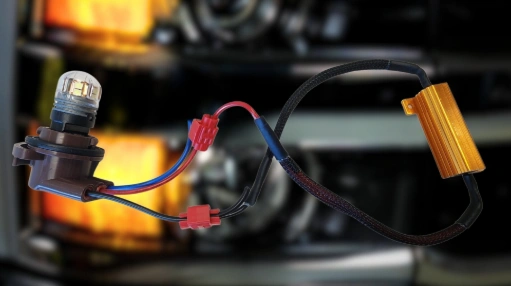
To understand why you might need a LED turn signal resistor, you first need to understand how traditional flasher systems work.
Traditional turn signals use incandescent bulbs that draw a relatively high amount of electrical current. Your vehicle’s flasher relay is designed to detect that load. If a bulb burns out or is missing, the system sees a drop in resistance and causes the signal to blink rapidly — a warning that something is wrong.
Now, when you switch to LED bulbs, they draw much less power than incandescent bulbs. The vehicle’s system interprets this low power draw as if a bulb is missing or has failed — triggering hyper-flashing, even though everything is functioning correctly.
An LED turn signal resistor, also known as a load resistor, is a small electrical device that mimics the resistance of a traditional incandescent bulb. It tricks the flasher relay into thinking the correct amount of power is being drawn, thereby preventing hyper-flashing.
The most common value used for these resistors is 6 ohms, 50 watts, which works well for most 12V LED applications.

The short answer is: It depends on your vehicle and how you’re upgrading your lighting.
You experience hyper-flashing after installing LED turn signals.
Your turn signals don't work at all or give a bulb-out warning.
Your vehicle has an older thermal flasher relay that depends on load.
Your vehicle uses a modern electronic flasher relay, which can often be replaced with an LED-compatible relay.
You install a dedicated LED flasher module that regulates the blink rate without needing resistors.
Your car already comes with CANBUS support and can automatically adjust to low-load LEDs.
If you decide to use an LED turn signal resistor, proper installation is critical to ensure both function and safety.
Locate the signal wiring: Access the wires leading to your LED turn signal.
Identify the correct wires: You'll typically connect the resistor between the positive (power) and negative (ground) wires of the turn signal.
Use wire taps or soldering: Secure the resistor to the wires using wire taps or solder for a solid connection.
Mount the resistor safely: These resistors get hot, so mount them on a metal surface away from plastic, wiring, or flammable materials.
Repeat for all turn signals: Install one resistor per LED bulb (or per circuit) depending on the vehicle and wiring configuration.
Safety tip: Never leave resistors dangling or touching plastic surfaces — they can reach temperatures hot enough to melt or damage nearby components.
Some vehicle owners prefer an alternative method to avoid using resistors altogether — swapping the OEM flasher relay with an LED-compatible flasher module.
No additional wiring required
No heat generated like resistors
Cleaner, simpler installation
May not be compatible with all vehicles
Sometimes more expensive or harder to find
If your vehicle supports an LED flasher replacement, it's often the more efficient and long-term solution.
Most 6-ohm 50W resistors are universal for 12V systems, but always check your vehicle’s wiring and bulb specs before installation.
You may experience hyper-flashing, error codes, or non-functional turn signals. In some regions, this could result in failing a vehicle inspection.
Only if your vehicle’s system checks for bulb resistance. For brake or tail lights, many vehicles don't monitor load, but it varies by make and model.
Typically, one per LED bulb you replace — for example, if you change all four turn signal bulbs, you’ll need four resistors.
High-quality LED turn signal resistors are available online and at most auto parts stores. Make sure to look for features like:
Heat-resistant housing
Waterproof or moisture-resistant design
Clear labeling of resistance and wattage
Mounting hardware included
So, do LED turn signals need a resistor? If your vehicle experiences hyper-flashing or warning lights after switching to LED bulbs, then yes, you’ll likely need to install an LED turn signal resistor or upgrade to an LED-compatible flasher relay.
Adding resistors may seem like a small step, but it’s crucial for ensuring that your new lighting setup functions smoothly and safely. Whether you’re upgrading for style, safety, or efficiency, make sure your vehicle’s electrical system is ready for the change.

Disclaimer: The views and opinions expressed by individual authors or forum participants on this website do not represent the views and opinions of Chipsmall, nor do they represent Chipsmall's official policy.

share this blog to:


Chipsmall will provide you real-time product updates, limited-time deals.


Copyright © 2004-2026 Chipsmall.com All Rights Reserved.

Feedback
We appreciate your engagement with Chipsmall's products and services. Your opinion matters to us! Kindly take a moment to complete the form below. Your valuable feedback ensures that we consistently deliver the exceptional service you deserve. Thank you for being part of our journey towards excellence.