5761
5761Are you searching for how to wire ac capacitor? While wiring an AC capacitor, it's essential to follow the correct steps to ensure proper functioning and prevent electrical issues.
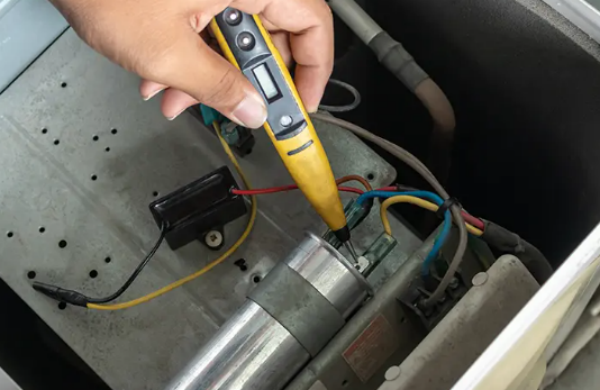
An AC capacitor is an essential component in electrical systems that stores and releases electrical energy. It helps in regulating voltage, improving power factor, and assisting in the starting and running of motors.
AC capacitors, unlike electrolytic capacitors, are not polarity-sensitive, meaning they can be connected in either direction without causing damage or affecting their performance. However, it is still important to connect AC capacitors correctly to ensure proper circuit operation and avoid potential safety hazards.
Here are some general guidelines for connecting AC capacitors:
Grounding: AC capacitors should be properly grounded to protect against electrical hazards and ensure proper circuit operation. The metal body or case of the capacitor should be connected to the ground terminal of the power supply or a dedicated grounding point.
Connections: AC capacitors can be connected to the circuit using wires or soldering. Ensure that the connections are secure and that there is no exposed metal that could come into contact with a live conductor.
Orientation: AC capacitors can be mounted in any orientation, but it is generally recommended to mount them vertically to prevent dust or moisture from accumulating inside the capacitor.
Marking: AC capacitors may have markings indicating the voltage rating, capacitance, and tolerance. Ensure that the capacitor is rated for the voltage and current requirements of the circuit.
Safety: Always work with caution when handling AC capacitors, as they can store electrical energy even when disconnected from the power source. Discharge the capacitor before handling it by connecting a resistor across its terminals.
If you are unsure about the wiring or connections for an AC capacitor, it is always best to consult a qualified electrician or refer to the manufacturer's instructions.
Before wiring an AC capacitor, you will need to prepare these gadgets:
After these essential tools, you can follow these steps to connect the AC capacitor.
It is important to connect the wires to the correct terminals of the power supply. Connecting the wires to the wrong terminals can damage the capacitor or the power supply.
If the capacitor is not labeled, you can use a multimeter to determine which wire is the + wire. Set the multimeter to the resistance setting and touch the two wires of the capacitor. The wire with the higher resistance is the + wire.
These are the most frequent color codes for AC capacitor terminals:
The letter "C" (or "Common") stands for black.
Other color codes that may be used in different regions include:
Wiring an AC capacitor wrong can have several negative consequences, ranging from minor to severe. Here are some of the potential outcomes:
Capacitor Failure: If you connect the capacitor's terminals in reverse polarity, it can lead to electrical breakdown, causing the capacitor to fail and potentially explode. This can result in damage to the capacitor itself, and surrounding components, and even pose a fire hazard.
Circuit Malfunction: Incorrectly wired capacitors can disrupt the flow of current in an AC circuit, causing malfunctions in the connected devices. This can manifest as distorted signals, reduced efficiency, or even complete failure of the circuit.
Safety Hazards: Improper wiring of AC capacitors can create electrical hazards, such as electric shocks, burns, and even electrocution. This is especially dangerous when working with high-voltage capacitors or in confined spaces.
Reduced Motor Performance: In the case of AC motor applications, wrongly wired capacitors can impair the motor's performance, leading to reduced torque, decreased efficiency, and even overheating.
Noise Interference: Incorrectly connected capacitors can introduce unwanted noise into an AC circuit, causing interference with sensitive electronic equipment. This can hinder signal quality and disrupt communication or data transmission.
To avoid these negative consequences, it is crucial to wire AC capacitors correctly. Always follow the manufacturer's instructions and color-coding schemes, and ensure proper grounding of the capacitor. If you are unsure about the wiring, consult a qualified electrician.
In short

Disclaimer: The views and opinions expressed by individual authors or forum participants on this website do not represent the views and opinions of Chipsmall, nor do they represent Chipsmall's official policy.

share this blog to:


Chipsmall will provide you real-time product updates, limited-time deals.


Copyright © 2004-2026 Chipsmall.com All Rights Reserved.

Feedback
We appreciate your engagement with Chipsmall's products and services. Your opinion matters to us! Kindly take a moment to complete the form below. Your valuable feedback ensures that we consistently deliver the exceptional service you deserve. Thank you for being part of our journey towards excellence.