415
415Dim lights, electrical malfunctions, or a stalled engine are among the problems that can be caused by a poorly performing alternator. Knowledge of an alternator's operation and testing methods will help you repair a car that has broken down, thus saving your valuable time and money.

An alternator that generates electricity is a distinct part of a vehicle's electrical system. Know more about A comprehensive guide to car alternators.
It attributes to the electric power of the battery and activates other electronic devices. Such vehicle lighting, the radio, the air conditioner, and other accessories will continue to operate correctly as long as the engine is running. Thus, the role of an alternator is a vital part that it needs to perform. Besides, a dead battery will be the worst thing that can happen to you after the engine is off and the alternator stops producing electricity. This way, your car would simply be an inoperable piece of metal parked alongside the road.
When an engine is running, electromagnetic induction is the process of the alternator converting mechanical energy generated by the engine into electrical energy. A rotor, a stator, and a diode rectifier are the main components performing the work. The alternator, which rotates when the engine is on, thus generates alternating current (AC), which is then transformed into direct current (DC) that is used to charge the battery. Besides, heat, wear and tear, and electrical failure can be the causes of their breakdowns along with old age.
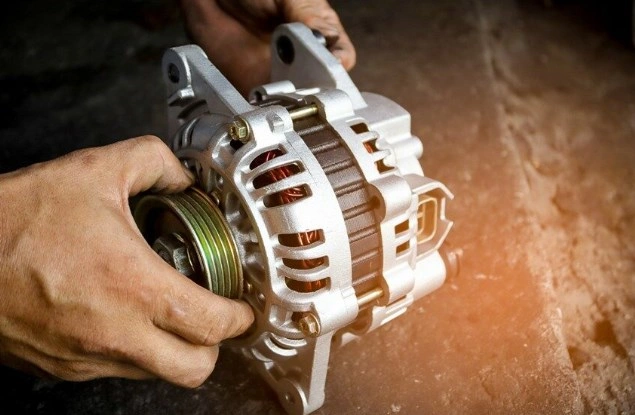
Early identification of a dysfunctional alternator may lead to less need for battery replacement and possibly reducing other electrical problems. Several warning signs indicate a malfunctioned alternator, and recognizing them early may save you time and money. Here are some common symptoms:
One of the most powerful indicators of an impending alternator is the headlamp or the interior light that flickers or dims from time to time. Such a case occurs since the alternator cannot deliver a flowing current to the car's circuits.
In the majority of the most recent models, there is a battery warning light on the dashboard. When the light goes on, it may signal the possibility of a defective alternator or charging system. Ignoring this may result in a flat battery.
If your car battery begins to die constantly then indeed the alternator is not charging it optimally. Despite the fact that the battery is the main troublemaker, a malfunctioning alternator can drain the battery one more time.
Grinding or whining noises produced by a failing alternator is the result of either worn-out bearings or internal damage. In case you hear a weird sound, which is definitely from the place under the car bonnet, the worth of inspection has to be really done of alternator or the whole car in general or it may die at any time you are driving in a bad neighborhood.
Moreover, the alternator is the main power source for your car. Power windows, power seats, air conditioning, and the rest of the electric components are affected by the alternator that is not delivering the right amount of power. You may see that your car’s windows go up or down quite displeasing sometimes or that the radio control buttons in the console stop previewing CD information from asthma ventilation (ACV1.2) and behave intermittently autonomously.
One of the causes of engine stalling might be a bad alternator. This happens when the alternator is not able to supply enough power to the ignition system and as a result, the engine cannot work properly.
'Knowing that an alternator creates a stalling engine, finding a qualified auto repair service near you and getting a quote and an idea of what will be required, will be helpful. Then you can locate a battery shop with a multimeter, see if it will take the test and give you the answer; if you like the test result.
Testing the alternator with a multimeter is a fairly easy process and is considered to be one of the methods to determine if the alternator is working fine. The multimeter that generally measures the voltage, current, and resistance is, in addition, a very useful tool for the cause of electrical challenges that it is used in diagnosing.
A Digital multimeter
Safety gloves and goggles
A wrench (if required the battery terminals)
Ensure the car is driving along the edge of a smooth surface with the engine in the off position.
The gloves and goggles worn by the working person are made of insulating materials like rubber and plastic to protect against electric hazards that can occur in these processes. In the event that proper insulation is not practiced electricity can thus be conducted through the person touching the faulting part of the system.
Do not touch a live wire and a bare part of a circuit at the same time to avoid a shock hazard! Roofs with electric wires should only be used by someone who is trained to avoid the electric hazards that could occur and who uses the necessary personal protective equipment such as rubber gloves and insulating shoes. To prevent direct contact with the active conductors Ave the affected roofer stands on a cover board.
Detailed Steps
Step 1: Check Battery Voltage
Switch off the engine and all electrical accessories.
Join the red probe of the multimeter to the positive terminal (+) of the battery and with
the black to the negative terminal (-).
A fully charged battery should read around 12.6 volts. If the reading is below 12 volts, the battery may need charging or replacement before testing the alternator.

Step 2: Start the Engine and Measure Voltage
Fire up the car and keep it running at a slow speed.
Don't miss keeping the multimeter probes hooked to the battery terminals.
An alternator in a good condition is expected to give a voltage value amidst the ranges of 13.8 and 14.8, which is what is happening while the engine is running.
It may be that the alternator is not charging the battery the way it should if the reading is below 13V. If it goes above 15V, the voltage regulator may be defective.
Step 3: Load Test the Alternator
Turn on electrical accessories such as headlights, air conditioning, and radio.
Observe the multimeter reading. The voltage should stay between 13.5-14.5 volts rather than the voltage with additional loads.
If the voltage drops substantially (12.5 volts), this may imply that the alternator is unhealthy.
Step 4: Check for Alternator Ripple (AC Voltage Test)
Switch the multimeter to the A.C. voltage setting (~V symbol).
Have your probes stay connected to the battery terminals running the engine.
Even a small variation (less than 0.5 volts) is sufficient. If the readings are higher, it might be caused by a faulty diode inside the alternator.
If your alternator does not pass all these checks, it has to be fixed or replaced. If your alternator fails any of these tests, it may need repair or replacement.

The price for an OEM alternator is going to vary with the make, model and the type of alternator needed of the vehicle. Initially below is a general scheme to these prices:
Aftermarket Alternators: $100 - $300
OEM Alternators: $300 - $600
Labor Costs: $50 - $200
Total Replacement Cost: $150 - $800
The quality and warranty of the brand, the factors that the cost of alternator brands depends on other than the existing warranty and whether the alternator is replaced or brand new are among the cost factors. Moreover, some luxury or upgraded cars might need out-of-pocket for more alternators because of new features and unique components.
There's a number of firms besides which they might be well-versed in producing really good alternators for various automobiles. Here are some of the top manufacturers:
Bosch: The most recognized brand capable of making super reliable and rugged alternators with the highest efficiency.
Denso: Delivering supercomputing equipment to academic institutions with advanced voltage regulation technology.
Delphi: Manufacturers of alternators that are the same as the original ones, thus meeting OEM standards and providing long-lasting durability.
One of the alternator replacement rules is that the best will be the one from a trustworthy brand, which is the only way to ensure that it would provide better performance and dwell.
1. Can a car run without an alternator?
Well, a car that is now running on the power of a battery is bound to stop as the battery discharges completely.
2. How long does an alternator last?
The vast majority of vehicle alternators last for a number of years in the range of 80,000 to 150,000 miles and can be expected to serve for a period of around 7 years with proper usage and regular maintenance.
3. Can an alternator drain a battery?
A bad alternator will overcharge or undercharge a battery, and this will result in a defective alternator recharging over time, so the battery will be drained before completing its normal service life.
4. What happens if you drive with a bad alternator?
Cars will lose various electrical functions such as the lights and radio when the alternator begins to malfunction due to undercharging or overcharging, ultimately leading to engine stalling, which poses a danger to anyone on board.
5. Can I replace an alternator myself?
Yes, if you are a skilled mechanic and have all the required tools, then it is possible to replace the alternator on your own. However, professional service will always be the right choice for a perfect fit.
6. Does a new alternator improve performance?
A new alternator makes the whole electrical system function properly again, but it is not the direct cause of the improved engine performance.
7. How do I know if my alternator fuse is blown?
When an alternator fuse is blown, it will cut off the source of charging to the battery. Look for any melted or broken fuses in the fuse box and if there is a need, replace them with new ones.
8. What causes an alternator to fail?
Typically, the reasons for alternators' damage or wearing off and hence their non-functionality can include the worn-out friction or plain bearings, voltage regulator failure, and overheating.
9. Can a bad alternator cause rough idling?
Yes, a faulty transformer can cause a break in the power supply and therefore make the engines run less to the fact that.
10. Should I buy a remanufactured alternator?
A remanufactured alternator is cheap and will be a good saving budget but it will not last very long as it is not new. You will have to buy one with a good warranty to be more reliable.
The proper rectification of the alternator can only be possible if you follow these guidelines, which will keep the vehicle in the best of health.

Disclaimer: The views and opinions expressed by individual authors or forum participants on this website do not represent the views and opinions of Chipsmall, nor do they represent Chipsmall's official policy.

share this blog to:


Chipsmall will provide you real-time product updates, limited-time deals.


Copyright © 2004-2026 Chipsmall.com All Rights Reserved.

Feedback
We appreciate your engagement with Chipsmall's products and services. Your opinion matters to us! Kindly take a moment to complete the form below. Your valuable feedback ensures that we consistently deliver the exceptional service you deserve. Thank you for being part of our journey towards excellence.