487
487The air conditioner is an indispensable appliance in modern households, providing a comfortable environment and relief from the scorching heat of summer. As an electrical appliance, the AC requires regular maintenance to avoid potential issues.
However, while repairing, we have to replace the AC capacitor which is a more common operation for the AC capacitor. So, how do you discharge an AC capacitor? Before we go deeper into this issue, we’d better study what is an AC capacitor.
The AC capacitor is an electronic component used to provide electrical capacity and starting current. It plays an important role in air conditioning, especially when starting and running compressors.
Discharging an AC capacitor is an important safety precaution while working with or around AC systems. Capacitors in air conditioners store electrical energy, and discharging them is important to avoid electric shock.
Here are the main reasons why you should discharge an AC capacitor.
Capacitors in air conditioners, specifically start and run capacitors, store electrical energy to aid in the startup and operation of the compressor motor.
Even when the air conditioner is switched off, these capacitors can maintain a large charge.
Capacitors hold electrical charge, which provides a risk of electric shock.
If the capacitor is not discharged prior to any maintenance, repair, or servicing work, there is a risk of serious harm or even death if someone comes into contact with charged components.
Discharging the capacitor is essential to protect individuals working on the air conditioning system.
It also prevents damage to electronic components and equipment that might occur if there is an unexpected discharge during maintenance or repair.
Tools needed for discharging an AC capacitor:
Below you will find ways to discharge an AC capacitor by using these tools.
Guidance on how to discharge an AC capacitor with screwdriver:
Put on Safety Gear
Wear insulated gloves to protect yourself from electrical shock.
Ensure you are wearing safety glasses or goggles.
Identify the Capacitor
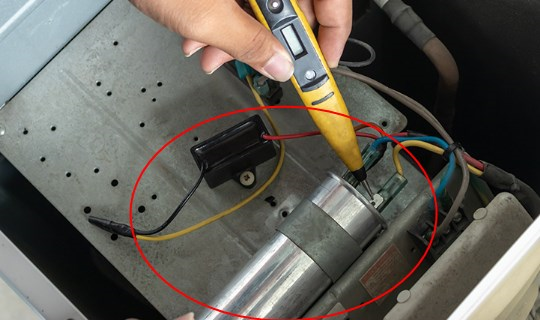
Locate the capacitor in the outdoor condenser unit. It is a cylindrical or oval-shaped component with wires connected to it.
Select the Right Screwdriver
Use a screwdriver with an insulated handle. The handle should be made of a non-conductive material to prevent electric shock.
Discharge Procedure
With the power off and the capacitor identified, take the insulated screwdriver and place it across the terminals of the capacitor. The screwdriver effectively bridges the terminals.
Make sure the metal shaft of the screwdriver contacts both terminals simultaneously.
Hold in Place
Hold the screwdriver in place, bridging the terminals, for about 5-10 seconds.
This allows any stored electrical charge in the capacitor to discharge through the screwdriver.
Remove the Screwdriver
After discharging, carefully remove the screwdriver from the capacitor terminals.
Double-Check Voltage
Use a voltage tester/meter to check across the capacitor terminals again to confirm that there is no voltage present. This is a crucial safety check.
Proceed with Caution
Once you've confirmed that the capacitor is discharged, you can proceed with any necessary maintenance or replacement.
Be cautious and aware of electrical hazards throughout the process.
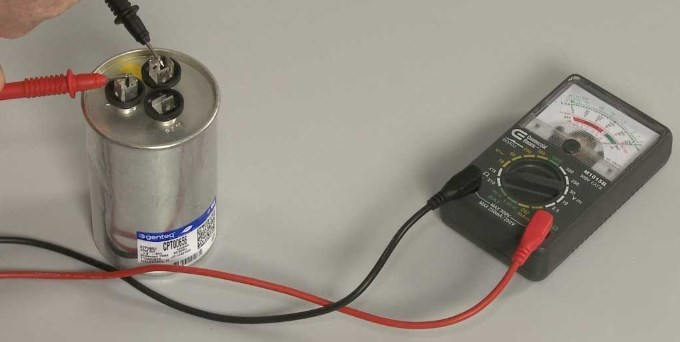
Guidance on how to discharge an AC capacitor with multimeter:
Step 1: Unplug from the Power Source
Step 2: Setting Up the Multimeter
Step 3: Turning the Knob to Peak DC Voltage Setting
Step 4: Connecting the Multimeter with the Capacitor
Step 5: Monitoring Discharge
Step 6: Final Safety Checks
Discharging an air conditioner capacitor can be deadly if done incorrectly. Capacitors in air conditioning systems store electrical energy, and mishandling the discharge process can pose a variety of dangers.
Electrical Shock
Capacitors can store a significant amount of electrical charge, and if not discharged properly, there is a risk of electric shock.
Because air conditioner capacitor voltage may be considerable, this can be very dangerous.
Arcing and Sparks
Sparks or arcs may occur when a capacitor is discharged. These sparks may ignite surrounding items or result in burns. Exercise caution to avoid any potential fire threats.
Equipment Damage
A capacitor that has been improperly discharged may become damaged, as well as other parts of the air conditioning system.
This might mean that pricey repairs or new parts are required.
Personal Injury
It may be necessary to use tools or implements during the discharge procedure. Physical injuries like cuts or puncture wounds can result from improper use of these instruments.
Incomplete Discharge
If the capacitor is not fully discharged, residual voltage may remain.
Working on the system under the assumption that the capacitor is safe can lead to accidental shocks and injuries.
Discharging an AC capacitor is a crucial step that demands careful attention to safety procedures. Mishandling capacitors can pose serious risks of electric shock or injury.
By following the proper precautions, such as turning off power, using insulated tools, and verifying the discharge with a multimeter, individuals can ensure a safe process.
It's essential to approach this task with respect for the potential electrical energy stored in the capacitor and to seek professional assistance if uncertain.
Ultimately, prioritizing safety in discharging an AC capacitor is not only a best practice but a fundamental responsibility for anyone involved in HVAC maintenance or repair.

Disclaimer: The views and opinions expressed by individual authors or forum participants on this website do not represent the views and opinions of Chipsmall, nor do they represent Chipsmall's official policy.

share this blog to:


Chipsmall will provide you real-time product updates, limited-time deals.


Copyright © 2004-2026 Chipsmall.com All Rights Reserved.

Feedback
We appreciate your engagement with Chipsmall's products and services. Your opinion matters to us! Kindly take a moment to complete the form below. Your valuable feedback ensures that we consistently deliver the exceptional service you deserve. Thank you for being part of our journey towards excellence.