636
636Don't know how to combine nonpolar capacitors? Never mind, this article will teach you step by step (suitable for green hand) and finally you will get a combined nonpolar capacitor with little effort. By strategically combining nonpolar capacitors, you can tailor the capacitance values to meet specific requirements in electronic circuits, ensuring optimal performance and functionality. You need to follow the 5 steps given below and the thing will be done.
Before we combine nonpolar capacitors, we need to have a clear mind about what they are.
Capacitors are electronic components used to store and discharge electrical energy. Capacitance determines a capacitor's ability to retain charge, with larger capacitance signifying better charge storage capacity.
Capacitors with neither positive nor negative polarity are known as non-polarized capacitors.
Non-polarized capacitors' two electrodes can be put into the circuit at random and will not leak. In addition, polar and nonpolar capacitors have different functions and there are several types of combinations of nonpolar capacitors.
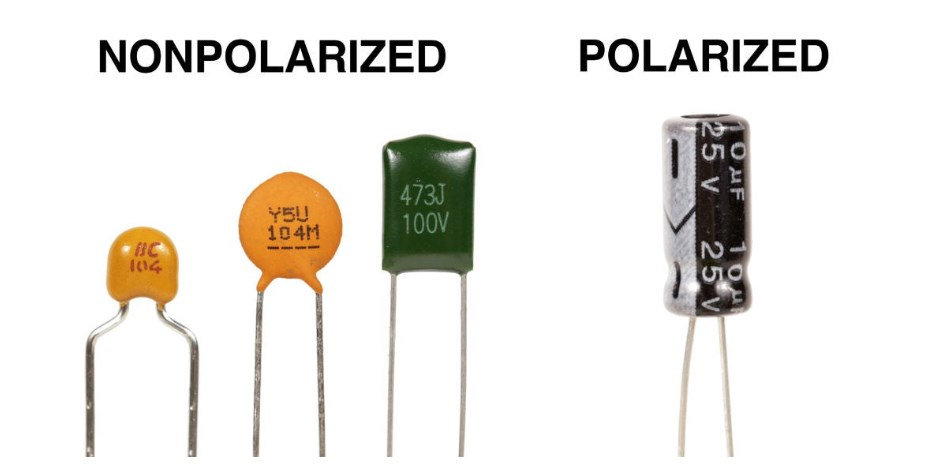
Both polar and non-polar capacitors serve the same fundamental function: storing electrical energy in an electric field. However, they differ in their construction, polarity, and applications.
Here are the key functions of polar capacitors:
Here are the key functions of non-polar capacitors:
Non-polar capacitors offer versatility due to their lack of polarity, allowing them to be combined in various ways to achieve desired capacitance and voltage ratings. The three main types of combinations are parallel combination, series combination, and mixed combination.
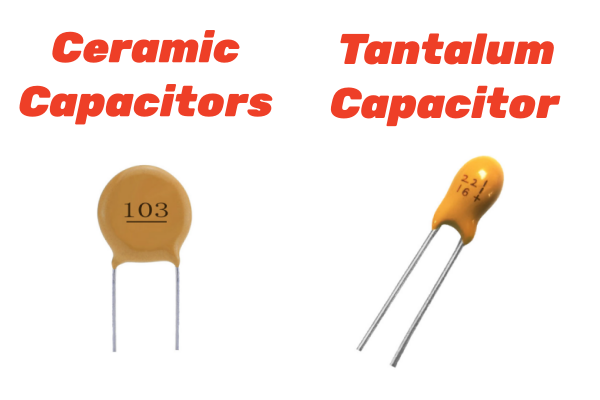
Non-polar capacitors are further separated into two sections. So we find two typical forms of non-polar capacitors.
Ceramic capacitors:
These are utilized in high-frequency appliances. They are little and light. Furthermore, these are relatively inexpensive. Despite their tiny size, they can conduct a large amount of electricity. As a result, they are commonly utilized in big appliances.
Tantalum capacitor:
These capacitors are employed in appliances with limited space because of their high density. These are for appliances that produce a large amount of heat. The most typical application for these capacitors is in audio equipment.
Unlike polar capacitors, which have particular polarity requirements, nonpolar capacitors provide greater freedom in connection and may be coupled in a variety of topologies. This provides chances to modify capacitance levels to satisfy specific circuit needs. Understanding how to combine nonpolar capacitors is vital, whether you want to enhance total capacitance or build bespoke capacitance values. Here's a guide to help you through the process.
By following the steps and taking necessary precautions, you can safely and effectively combine non-polar capacitors to meet your specific circuit requirements:
Ideal capacitors are originally non-polar. However, in reality, in order to obtain large capacity, some special materials and structures are used, which leads to the fact that some actual capacitors are polar. Common polar capacitors include aluminum electrolytic capacitors, tantalum electrolytic capacitors, etc. Electrolytic capacitors generally have relatively large capacity. If you want to make a large-capacity non-polar capacitor, it is not so easy, and the volume will become very large. This is why there are so many polar capacitors in actual circuits-because it is relatively small, and because the voltage in such a circuit has only one direction, polar capacitors can come in handy. We use polar capacitors to avoid its shortcomings and take advantage of its advantages. We can understand it this way: a polar capacitor is actually a capacitor that can only be used in one voltage direction. A non-polar capacitor can be used in both voltage directions. Therefore, from the perspective of voltage direction alone, a non-polar capacitor is better than a polar capacitor.
From the above analysis, it can be seen that it is completely possible to use a non-polar capacitor instead of a polar capacitor-as long as the capacity, working voltage, volume, etc. meet the requirements.
Combining non-polar capacitors offers a versatile solution to achieving specific capacitance and voltage requirements in your electronic projects. This article equipped you with the knowledge and practical steps to confidently combine non-polar capacitors, ensuring optimal performance and safety.
Remember to choose appropriate capacitors, connect them correctly, and validate their functionality for a successful outcome. Now, if your friends ask you how to combine nonpolar capacitors, just send them this article!

Disclaimer: The views and opinions expressed by individual authors or forum participants on this website do not represent the views and opinions of Chipsmall, nor do they represent Chipsmall's official policy.

share this blog to:


Chipsmall will provide you real-time product updates, limited-time deals.


Copyright © 2004-2026 Chipsmall.com All Rights Reserved.

Feedback
We appreciate your engagement with Chipsmall's products and services. Your opinion matters to us! Kindly take a moment to complete the form below. Your valuable feedback ensures that we consistently deliver the exceptional service you deserve. Thank you for being part of our journey towards excellence.