646
646In the world of automotive audio, achieving clear, balanced, and powerful sound inside a car cabin is no simple task. Unlike a home theater, a vehicle’s interior presents unique acoustic challenges—irregular shapes, reflective surfaces, and inconsistent speaker placement.
That’s where the Car Audio DSP (Digital Signal Processor) comes in. Acting as the “brain” of a modern sound system, the DSP processes and optimizes every audio signal before it reaches the amplifiers and speakers. This technology has revolutionized car sound tuning, allowing drivers and engineers to achieve professional-grade acoustics in everyday vehicles.
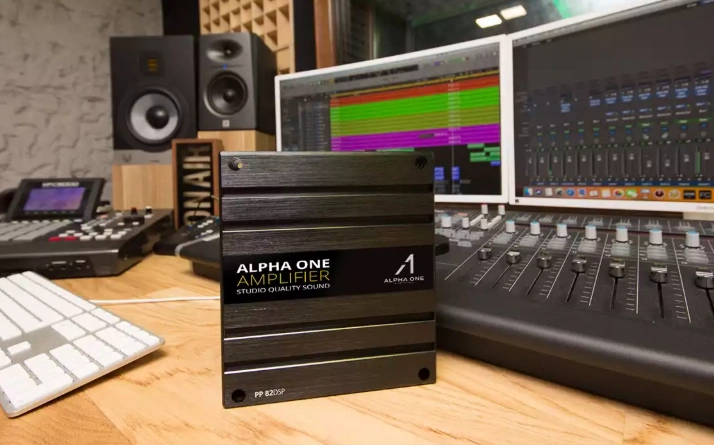
A Digital Signal Processor (DSP) is a microchip that performs mathematical operations on audio signals in real time. In car audio applications, it analyzes the input signal, applies various filters and adjustments, and outputs a perfectly tuned sound tailored to the vehicle’s acoustics.
In essence, the DSP converts analog sound signals into digital data, processes them through algorithms, and converts them back into analog output. This digital processing allows unprecedented precision compared to traditional analog equalizers.
Modern automotive DSP chips can handle functions such as:
Time alignment – delaying certain speaker signals so that sound reaches the listener’s ears simultaneously.
Equalization (EQ) – fine-tuning specific frequency ranges for balanced output.
Crossover filtering – sending only the appropriate frequencies to tweeters, midrange speakers, and subwoofers.
Noise cancellation – reducing road and engine noise for a cleaner listening experience.
Unlike static rooms, cars are acoustically complex spaces. The dashboard reflects high frequencies, the seats absorb mids, and door panels vibrate under low bass. These variables make traditional analog tuning almost impossible.
A car audio DSP corrects these imperfections by digitally compensating for speaker location, cabin resonance, and phase issues. The result is a smoother frequency response and an immersive stereo image that places the listener in the “sweet spot,” even in the driver’s seat.
High-end car manufacturers such as BMW, Mercedes-Benz, and Lexus now integrate DSP technology into their premium sound systems to deliver audiophile-level performance without aftermarket modification.
At the heart of every automotive DSP unit are several crucial electronic parts:
Microprocessor or DSP core – performs high-speed mathematical computations such as Fast Fourier Transforms (FFT) to analyze frequency data.
ADC (Analog-to-Digital Converter) – converts analog audio signals from the head unit or source into digital format for processing.
DAC (Digital-to-Analog Converter) – converts processed digital signals back to analog before amplification.
Memory (RAM/EEPROM) – stores filter coefficients, user profiles, and tuning presets.
Operational amplifiers (op-amps) – buffer and stabilize input/output stages.
These components are carefully designed for low noise, high precision, and wide dynamic range, ensuring every detail of the music is preserved.
The DSP divides sound into multiple frequency bands (typically 31 or more) and allows precise adjustment of each. This compensates for speaker inconsistencies and cabin acoustics.
For example, you can reduce harsh high frequencies or boost low bass without distortion.
Because each speaker is positioned at a different distance from the listener, sound from the front-left speaker may reach your ear earlier than the right one. DSPs use time delay algorithms—measured in milliseconds—to align these sounds, creating a cohesive soundstage.
DSPs allow you to set high-pass, low-pass, and band-pass filters, sending specific frequency ranges to tweeters, midrange drivers, and subwoofers. Active digital crossovers provide more accurate filtering than passive analog ones.
DSPs also adjust signal phase to ensure all frequencies are in sync, improving depth and clarity. Some advanced systems use 3D sound algorithms to simulate concert-hall acoustics.
Many DSPs include pre-configured modes—such as “Rock,” “Jazz,” “Vocal,” or “Studio”—optimized for different music genres or preferences. Users can also store custom EQ settings.
Modern digital signal processors for car audio are designed to integrate seamlessly with factory or aftermarket head units. Many include:
Bluetooth or USB connectivity for smartphone-based tuning apps.
PC tuning software with real-time graphical EQ displays.
Optical and coaxial digital inputs for high-resolution audio sources.
CAN bus compatibility for communication with the car’s control systems.
This flexibility makes DSPs suitable for both casual listeners and audio professionals seeking precise control over every frequency.
Several semiconductor manufacturers dominate the automotive DSP market, including:
Analog Devices (ADI) – known for SigmaDSP processors, used in high-end systems.
Texas Instruments (TI) – produces the popular TAS and C67x DSP families.
NXP Semiconductors – offers automotive-grade DSPs optimized for infotainment.
Cirrus Logic and AKM – provide high-performance audio converters (ADC/DAC).
These chips are engineered for extreme reliability, operating under high temperature and vibration conditions inside a vehicle.
The next generation of car audio DSPs is moving toward AI-assisted sound optimization. With machine learning algorithms, future processors will automatically analyze cabin acoustics and dynamically adjust tuning parameters in real time.
Additionally, the rise of electric vehicles (EVs) has pushed for low-noise, low-power DSP designs that integrate seamlessly with digital infotainment platforms. Expect future DSPs to support 3D surround sound, spatial audio formats like Dolby Atmos, and even personalized sound zones for each passenger.
The Digital Signal Processor is the hidden hero of every high-quality car audio system. By intelligently managing time alignment, equalization, and crossover functions, it ensures crystal-clear sound reproduction no matter where you sit in the car.
For audio engineers, understanding the role of DSPs unlocks new possibilities in system design. For everyday drivers, it means one thing—pure, immersive, and precisely tuned music on every journey.

Disclaimer: The views and opinions expressed by individual authors or forum participants on this website do not represent the views and opinions of Chipsmall, nor do they represent Chipsmall's official policy.

share this blog to:


Chipsmall will provide you real-time product updates, limited-time deals.


Copyright © 2004-2026 Chipsmall.com All Rights Reserved.

Feedback
We appreciate your engagement with Chipsmall's products and services. Your opinion matters to us! Kindly take a moment to complete the form below. Your valuable feedback ensures that we consistently deliver the exceptional service you deserve. Thank you for being part of our journey towards excellence.