4496
4496Bulk capacitor, generally referred to as a capacitor with a capacity ranging from micrometer to farad. In this section, a comprehensive introduction of bulk capacitors will be shown for your reference.
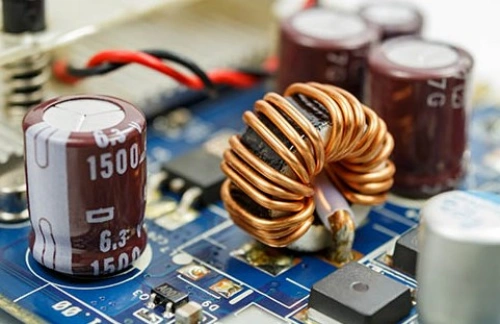
According to the different materials and structures, they are mainly divided into aluminum electrolytic capacitors, tantalum capacitors, ceramic capacitors and thin film capacitors.
|
Types of Bulk Capacitors |
|
|
Electrolytic Capacitors |
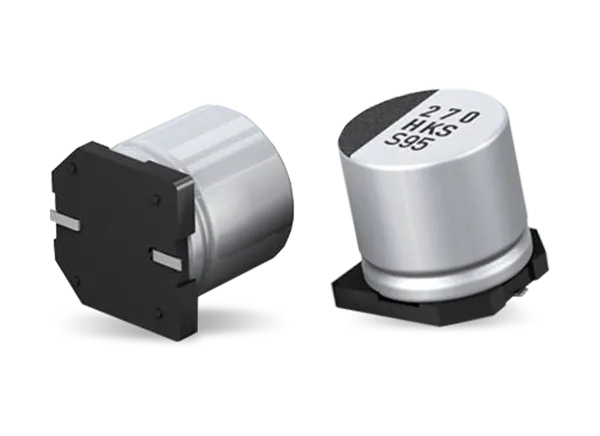
Electrolytic capacitors are polarized capacitors that use an electrolyte to achieve high capacitance values, commonly used in electronic circuits for filtering, energy storage, and smoothing in power supplies. |
|
Ceramic capacitor (MLCC) |
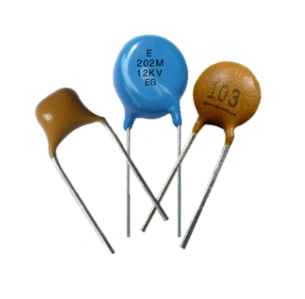
Chip multilayer ceramic capacitor (MLCC) is a kind of miniaturized, high-capacity, high-performance passive electronic component, which is widely used in various consumer electronics, communication equipment, computers and automotive electronic products. |
|
Thin film capacitance |
A thin film capacitor is a capacitor formed by wrapping two plastic films with metal electrodes into a cylindrical shape. |
|
Super capacitor |
A Super capacitor, also known as an electrochemical capacitor or double-layer capacitor, is an energy storage device between a traditional electrolytic capacitor and a battery. |
Features
Advantages
Drawbacks
Where to buy quality electrolytic capacitors>> Best Capacitor Brands: Top 20 Electrolytic Capacitor Manufacturers in 2024
Features
Advantages
Drawbacks
Here is the >> List of Ceramic Analog Suppliers
Features
Advantages
Disadvantages
Features
Advantages
Disadvantages
When choosing bulk capacitors, you need to consider several key factors:
1. Type of capacitor
If you can find the correct capacitance value, go with the film capacitors as opposed to any other type. Especially electrolytics, which are the worst in reliability. However, you may not sometimes have a choice since film capacitors cannot be manufactured with large capacitance values. But when you can, it is a wise choice to use a film capacitor.
2. Capacity and pressure resistance
Capacity and voltage resistance are the most important parameters in capacitor selection, because they are directly related to whether the design can achieve the desired function.
3. Frequency characteristics
The performance of capacitors at different frequencies is also important, especially in high frequency applications, where it is necessary to choose a capacitor that can provide good performance in the desired frequency range.
4. Practical application
Depending on the actual application, different types of capacitors may be required. For example, in cases where a large number of parallel connections are required to increase the total capacity, ceramic capacitors and thin film capacitors may be better choices.
When selecting bulk capacitors, you need to consider the above factors and make a proper selection based on the specific requirements.
When looking for alternatives to bulk capacitors, there are several options to consider. While film capacitors are reliable, they are relatively expensive and have low capacitance density, which can lead to physical size issues that limit their use in some applications.
So with buck converters, the main things you want to keep in mind for capacitors are capacitance, voltage, rating, ESR, and ripple current rating. Additionally, it's common to have some large capacitors with a moderately high ESR and also some lower capacitance ceramic capacitors due to their lower ESR. If you're worried about the output ripple, it is useful to simulate the whole circuit in the circuit simulator of your choice.
Besides, as an alternative to multi-layer ceramic capacitors (MLCC), solid polymer capacitors are a viable option in many applications. Their key features compared to MLCC can be considered according to specific application requirements.
Then, for small capacity aluminum electrolytic capacitors, you can consider using epoxy encapsulated tantalum capacitors, especially in the case of extreme temperature cycles.
Fourthly, active capacitance reduction circuit, a newer alternative that reduces the required capacitance value by transferring the pulse power component to a small energy storage element using a two-way DC-DC converter is also helpful. This approach can not only improve reliability, but also achieve physical size and cost reduction in applications above a certain level.
When choosing an alternative, the specific requirements of the application need to be considered, including factors such as operating voltage, temperature range, size limitations, cost and reliability.
1. How to size a bulk capacitor?
The higher the capacitance, the lower the deviation. Therefore, the size of the input bulk capacitor is determined by the size of the output current transient and the allowable input voltage deviation. The amplitude of the input voltage deviation during a transient is directly proportional to the load current change.
2. What is a capacitor calculator?
This is the capacitor energy calculator, a simple tool that helps you evaluate the amount of energy stored in a capacitor. You can also find how much charge has accumulated in the plates. Read on to learn what kind of energy is stored in a capacitor and what is the equation of capacitor energy.
3. How do you read a capacitor size?
The first two digits will indicate the base capacitor value in picoFarads. The third digit will indicate a multiplier to be used on the base number to find the actual value of the capacitor. Use a third digit of 0 through 5 to place the corresponding number of 0s behind the base value.
If you have more questions about bulk capacitors, you can search for the product website and ask for professional help.
As an indispensable component in the electronic field, bulk capacitors play an important role in power management and signal processing. With the continuous progress of technology, we have reason to believe that the future of large-capacity capacitors will be more efficient and stable, and provide more powerful support for the performance improvement of electronic devices.

Disclaimer: The views and opinions expressed by individual authors or forum participants on this website do not represent the views and opinions of Chipsmall, nor do they represent Chipsmall's official policy.

share this blog to:


Chipsmall will provide you real-time product updates, limited-time deals.


Copyright © 2004-2026 Chipsmall.com All Rights Reserved.

Feedback
We appreciate your engagement with Chipsmall's products and services. Your opinion matters to us! Kindly take a moment to complete the form below. Your valuable feedback ensures that we consistently deliver the exceptional service you deserve. Thank you for being part of our journey towards excellence.