2474
2474Brake booster check valve of your car, or the maintenance of braking system in your car, is usually meant not to pay attention to this part by the majority of automobile drivers. However, this insignificant part is the basis of the entire braking system and without it, no safety or high efficiency can be provided. Here, we examine the main roles of the brake booster check valve, talk about the best place to fit it, and what should be done when it goes bad. The intrinsic details of this tiny but powerful car part will be the center of attention of the article!
.webp)
Before you can inspect the brake booster check valve, you first must know what a brake booster is and what its purpose is for the entire braking system. A brake booster is an apparatus which can be found in every latest model car and whose purpose is to amplify the pressure that one applies on the brake pedal. The sole purpose of a brake booster is to reduce the effort a driver must exert for a car to be stopped.
The brake booster adds vacuum support to the ease of master cylinder application when you step on the pedal for the brakes. This vacuum is usually supplied by the engine's intake manifold, or occasionally through an auxiliary pump, depending on the car's design. Essentially, the car driver can make the car stop using the brakes without exerting a lot of pressure when pressing them thus the drive will be smooth and secure.
Most cars are fitted with a dual diaphragm brake booster that, apart from increasing significantly the braking power, also provides an added safety, particularly when vacuum failure occurs. During vacuum system failure, the brake booster can still work, but the pedal pressing operation's resistance will get higher.
The check valve for the brake booster carries out the important function of maintaining the brake booster in an effective vacuum condition. This valve locks the primary vacuum for the brake boost and keeps holding it down when you let off the pedal. Here, where specifically should the check valve be located?
Generally, the brake booster check valve can be located in the vacuum hose that runs between the brake booster and the intake manifold on the engine. The attachment location is quite significant as it would facilitate the valve to control the vacuum flow within the booster throughout the cycle, thus making the entire system efficient and running effectively.
The check valve must be located between the vacuum source of the engine and the brake booster. The vacuum pressure may be erratic and can create a number of different types of brake issues if the valve is misplaced or is damaged.
Moreover, orientation for the installation ought to be correct in order for the check valve to be properly installed. The vacuum entrance is an indicator that the brakes are being employed but when the turbocharger is unloaded, the vacuum exit will be closed. Inappropriate installation may imply the loss of the braking force and, worst still, total failure of the braking system, hence the importance to be installed correctly.
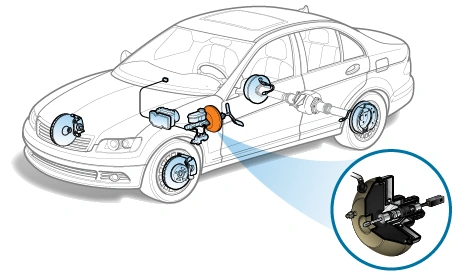
With the position of the brake booster check valve now known, let’s learn more about what it does. A brake booster check valve is a basic but crucial component for sustaining vacuum pressure within the brake booster. Its major function is the control of vacuum pressure incoming into the booster and keeping it from escaping after releasing the pedal.
When you depress the brake pedal, vacuum pressure is used by the brake booster to help apply pressure to the brake master cylinder. This enables you to apply the brakes with ease. However, when you release the pedal, vacuum pressure must be stored within the brake booster so that the pedal will be ready for the next brake application.
The vacuum flows only one way through the check valve and prevents the vacuum from moving in the return direction. As the brake pedal is let out, the valve keeps the vacuum from being dissipated, thus keeping the brake booster under sufficient pressure for the next braking application.
Basically, the brake booster check valve makes certain that your brakes work smoothly and predictably, irrespective of the number or severity of times that you use them. In the absence of this valve, vacuum pressure would be uneven, and you would experience variable braking.
As with any part on your car, the brake booster check valve can malfunction after a while. A malfunction in this otherwise small component can cause major problems for your car's braking. What then, you may wonder, does occur when the brake booster check valve fails?
Once the check valve malfunctions, vacuum pressure within the brake booster is allowed to escape. This, in turn, results in loss of assist for braking since the booster will be unable to amplify the pressure on the brake pedal. At worse, the brake pedal may be difficult to depress or may be absolutely unresponsive.
A faulty check valve can also create vacuum leaks, which can affect the overall functioning of your engine. Because the check valve is connected to your engine's vacuum system, a malfunction can produce uneven engine operation, i.e., rough idling or poor acceleration.
Moreover, if there is an absence of the right vacuum pressure, the brake system would demand more pedal effort from the driver. This not only feels uncomfortable while driving but could be a major safety concern as well, especially during emergency situations when sudden braking is called for.

Recognizing a faulty brake booster check valve is a matter of utmost importance, since you can prevent the braking capacity which has been compromised. Some of the most common symptoms that your brake booster check valve may be faulty are mentioned below:
One of the most apparent signs that there's a bad brake booster check valve is a hard brake pedal. Whenever you have difficulty pressing the brake pedal, it can be a sign that vacuum pressure is not being sustained properly, and the brake booster is not giving you sufficient support.
Another symptom, which is a hissing sound from the brake pedal location, is a sign that the brake booster check valve is faulty. It usually indicates a vacuum leak, which may be caused by a faulty or leaky check valve.
When the braking performance becomes less responsive or feels uneven, it may indicate that the brake booster check valve is faulty. While the brakes may still function, they could be harder to apply than normal.
As the brake booster check valve is part of the vacuum system connected to the engine, a malfunctioning valve may stall or idle the engine. In case you notice engine trouble coupled with issues while braking, the culprit is most likely to be the check valve.
Another symptom of a bad brake booster check valve is when the brake pedal remains down after being depressed. It is caused when vacuum pressure is not being properly released and hence the pedal stays depressed.
The brake booster check valve is a small but an important component for your car's braking system. It's the component that ensures your brakes don't have any issues, are quick, and reliable by maintaining the vacuum pressure within the brake booster. For your car's safety and overall functioning of the brake system, the valve needs to be properly installed and kept well-maintained.
If the brake booster check valve fails, you may exhibit a number of symptoms which include hard pedaling, poor braking performance, or even engine issues. Should the brake booster check valve be the culprit you suspect for your issues, it is most important to immediately stop, park, and get it checked and replaced to avoid potential hazardous conditions on the road.
Regular checks and replacement of worn-out components are what maintain the braking system in optimal health, which is safe for you and your passengers during your drive. Need assistance? In case you are unsure about signs of a dirty brake booster check valve, seek advice and guidance from a professional mechanic.
Once you understand what the brake booster check valve does and why it is important, you can be certain your car's braking system is running efficiently and safely when you are going for a drive

Disclaimer: The views and opinions expressed by individual authors or forum participants on this website do not represent the views and opinions of Chipsmall, nor do they represent Chipsmall's official policy.

share this blog to:


Chipsmall will provide you real-time product updates, limited-time deals.


Copyright © 2004-2026 Chipsmall.com All Rights Reserved.

Feedback
We appreciate your engagement with Chipsmall's products and services. Your opinion matters to us! Kindly take a moment to complete the form below. Your valuable feedback ensures that we consistently deliver the exceptional service you deserve. Thank you for being part of our journey towards excellence.