1103
1103Buying a 3D printer can feel overwhelming with so many options and price ranges out there. How much should you spend? What features really matter?
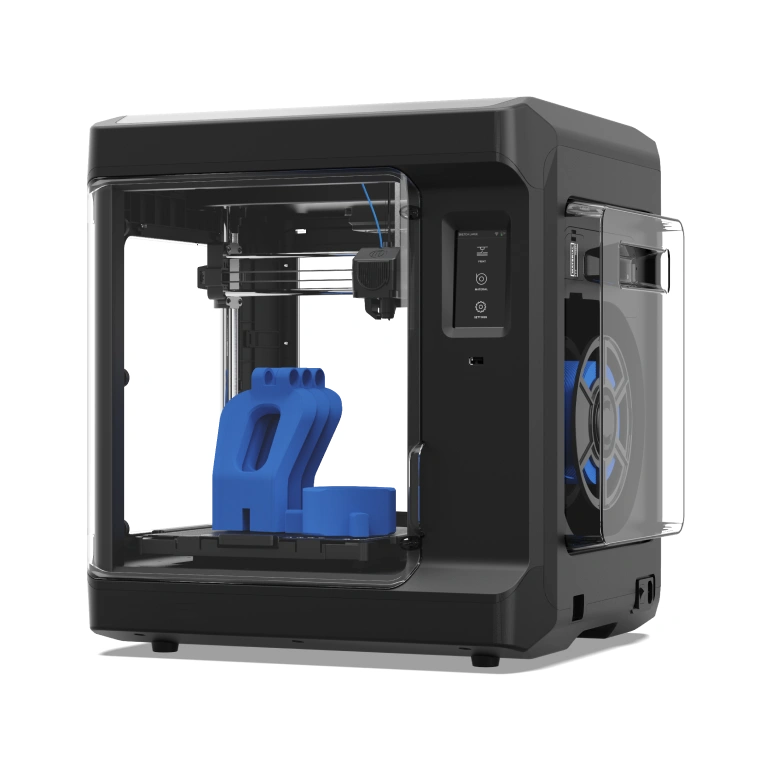
Image Source: Makerbot
Whether you’re a beginner, hobbyist, or professional, understanding the costs and what you get for your money is key to finding the right printer for your needs. In this guide, we’ll break down 3D printer pricing, explore different features, and help you make a choice that offers the best value for your budget.
A 3D printer is a machine that turns digital designs into real, physical objects. It does this by adding material layer by layer, kind of like building something from the ground up. You create a 3D model on your computer, and the printer follows that design to “print” the object using materials like plastic, metal, resin, or even food!
People use 3D printers for all kinds of things. Companies in fields like engineering, healthcare, and manufacturing use them to make prototypes or custom parts. Hobbyists print everything from toys and models to home decor and tools. Even schools and universities use them to bring students’ ideas to life. Basically, if you can design it on a computer, a 3D printer can make it!
There are different types of 3D printers, each using a unique technology to create objects. Here's a simplified breakdown of the most common ones:
Fused Deposition Modeling (FDM) is the most common 3D printing type. It works by heating a nozzle to melt plastic filament, which is then extruded layer by layer to form an object. Common materials include PLA, ABS, PETG, and nylon, making it ideal for prototyping, education, and affordable consumer models. FDM is affordable, easy to use, and offers a wide range of materials, but its print quality is lower compared to other methods.
Stereolithography (SLA) uses a laser to cure liquid resin layer by layer, forming a highly detailed object. The materials used are photopolymer resins, and it's commonly used for high-resolution models, jewelry, dental applications, and functional parts. SLA offers fine details and smooth finishes, but the materials are expensive and print times can be longer.
Selective Laser Sintering (SLS) works by using a laser to fuse powdered materials, such as nylon, metals, or ceramics, into a solid object. It's often used in aerospace, automotive, and functional prototypes. SLS offers strong parts and eliminates the need for extra supports, but it's expensive and requires post-processing.
Digital Light Processing (DLP) is similar to SLA, but instead of a laser, DLP uses a digital projector to cure the entire resin layer at once. It's used for jewelry, dental applications, and rapid prototyping. DLP is faster than SLA and offers high resolution, but it also comes with expensive materials and maintenance costs.
Multi-Jet Fusion (MJF) uses an inkjet array to apply a binding agent to a powder bed, which is then fused by heat. Common materials include nylon and thermoplastics, and it’s ideal for functional prototypes and small production runs. MJF is fast and produces strong parts, but it’s expensive and requires post-processing.
Direct Metal Laser Sintering (DMLS) is a type of SLS that uses metal powders instead of plastics or other materials. Materials include titanium, aluminum, stainless steel, and more, making it ideal for aerospace, automotive, medical implants, and tooling. DMLS produces strong metal parts but is expensive and requires post-processing.
Laminated Object Manufacturing (LOM) uses layers of material, such as paper, plastic, or metal, which are cut and laminated together to create an object. It’s mostly used for prototypes and architectural models. LOM is cost-effective and simple, but it has limited material options and lower resolution.
Electron Beam Melting (EBM) works by using an electron beam to melt metal powder in a vacuum environment, building the object layer by layer. It’s used for titanium alloys, cobalt-chromium alloys, and more, mainly for aerospace, medical implants, and high-performance parts. EBM produces strong metal parts, but the process is slow and costly.
Fused Granulate Fabrication (FGF) uses granules of material that are heated and extruded through a nozzle to form an object. FGF is suited for large-scale printing and rapid prototyping, capable of handling larger material feedstocks. However, it requires large and expensive equipment, and the print resolution is lower.
The cost of 3D printers varies widely based on their technology, capabilities, and materials. Here’s a breakdown of the typical price ranges for each type of 3D printer, along with examples of actual products.
1. Fused Deposition Modeling (FDM)
Price Range: $200 - $10,000+
Budget Models: $200 - $500 (e.g., Creality Ender 3 - $200)
Mid-Range Models: $500 - $2,000 (e.g., Prusa i3 MK3 - $1,000)
High-End Models: $2,000 - $10,000+ (e.g., Ultimaker S3 - $4,000)
Costs Breakdown:
Materials: Filament costs around $20 - $50 per kilogram (PLA, ABS, PETG).
Maintenance: Affordable; replacing hotends, nozzles, and other components might cost around $20 - $200.
2. Stereolithography (SLA)
Price Range: $500 - $25,000+
Budget Models: $500 - $2,000 (e.g., Anycubic Photon Mono X - $500)
Mid-Range Models: $2,000 - $10,000 (e.g., Formlabs Form 3 - $3,500)
High-End Models: $10,000+ (e.g., 3D Systems ProJet MJP 2500 - $25,000)
Costs Breakdown:
Materials: Resin typically costs $50 - $200 per liter.
Maintenance: Resin tanks and printheads can cost $50 - $200 for replacements.
3. Selective Laser Sintering (SLS)
Price Range: $10,000 - $1,000,000+
Entry-Level Models: $10,000 - $50,000 (e.g., Sintratec Kit - $10,000)
Mid-Range Models: $50,000 - $150,000 (e.g., Formlabs Fuse 1 - $50,000)
High-End Models: $150,000+ (e.g., EOS P 396 - $300,000+)
Costs Breakdown:
Materials: Nylon powder typically costs $50 - $150 per kilogram.
Maintenance: Requires post-processing equipment; overall maintenance and operating costs can be quite high due to complex machinery.
4. Digital Light Processing (DLP)
Price Range: $500 - $15,000+
Budget Models: $500 - $1,500 (e.g., Elegoo Mars 2 Pro - $200)
Mid-Range Models: $1,500 - $5,000 (e.g., Phrozen Sonic Mega 8K - $1,500)
High-End Models: $5,000 - $15,000 (e.g., Miicraft 125 - $12,000)
Costs Breakdown:
Materials: Resin costs around $50 - $200 per liter.
Maintenance: Requires regular tank and light source maintenance, typically costing $20 - $100 per month.
5. Multi-Jet Fusion (MJF)
Price Range: $20,000 - $500,000+
Mid-Range Models: $20,000 - $100,000 (e.g., HP Jet Fusion 300/500 series - $60,000+)
High-End Models: $100,000 - $500,000+ (e.g., HP Jet Fusion 5200 - $300,000)
Costs Breakdown:
Materials: Nylon powder typically costs around $100 - $200 per kilogram.
Maintenance: High operational costs due to the need for specialized post-processing and powder handling.
6. Direct Metal Laser Sintering (DMLS)
Price Range: $150,000 - $1,500,000+
Mid-Range Models: $150,000 - $300,000 (e.g., EOS M 290 - $250,000)
High-End Models: $300,000 - $1,500,000+ (e.g., SLM Solutions SLM 500 - $1,000,000)
Costs Breakdown:
Materials: Metal powders (titanium, stainless steel, etc.) can cost $500 - $2,000 per kilogram.
Maintenance: Expensive, as it requires regular servicing and post-processing, costing $10,000 - $50,000 annually.
7. Laminated Object Manufacturing (LOM)
Price Range: $5,000 - $100,000+
Mid-Range Models: $5,000 - $30,000 (e.g., Mcor IRIS+ - $30,000)
High-End Models: $30,000 - $100,000+ (e.g., Stratasys Objet500 Connex3 - $100,000+)
Costs Breakdown:
Materials: Paper, plastic, or metal foil costs around $50 - $500 per roll or sheet.
Maintenance: Generally low maintenance, though consumable material costs can add up over time.
8. Electron Beam Melting (EBM)
Price Range: $200,000 - $1,500,000+
Mid-Range Models: $200,000 - $500,000 (e.g., Arcam Q10 - $500,000)
High-End Models: $500,000 - $1,500,000+ (e.g., Arcam EBM S12 - $1,200,000)
Costs Breakdown:
Materials: Metal powders like titanium alloys cost around $500 - $1,500 per kilogram.
Maintenance: High operational and service costs, typically around $100,000 annually.
9. Fused Granulate Fabrication (FGF)
Price Range: $20,000 - $200,000+
Mid-Range Models: $20,000 - $80,000 (e.g., BigRep ONE - $40,000)
High-End Models: $80,000 - $200,000+ (e.g., Modix BIG-120X - $100,000)
Costs Breakdown:
Materials: Thermoplastic granules cost around $50 - $200 per kilogram.
Maintenance: Requires larger machines with more complex servicing, which can add up to $10,000+ annually.
When you’re thinking about a 3D printer cost that works for you at reasonable cost, here’s what to keep in mind:
If you're just doing basic printing or prototyping, an FDM printer (like the Creality Ender 3) is a solid choice. It’s affordable, easy to use, and great for home or school projects.
But if you need high-detail prints (think jewelry or dental stuff), an SLA printer (like the Anycubic Photon) is better. It’s more precise, so you can get those tiny, detailed parts right.
FDM printers work with 3D printer filaments like PLA or ABS, which are cheap and easy to find, making them perfect for casual printing.
SLA printers use resins, which are more expensive but give you that crisp detail you need for smaller, intricate designs.
For entry-level or casual use, FDM printers are usually in the $200-$500 range, so they’re affordable for most people.
If you’re looking for better quality, SLA printers are a step up and usually cost between $500 and $2,000.
Want to go big with SLS or metal 3D printers? Be prepared to drop $10,000+.
FDM printers are good for regular use and print at a decent speed, but the quality isn’t as sharp as other methods.
SLA prints give you better detail but take longer to finish, especially for those fine details.
Running a 3D printer isn’t too costly, but it does involve some ongoing expenses. The primary costs are for the materials (filament or resin), which can vary depending on the type of 3D printer and what you’re printing. Electricity usage is relatively low, and occasional maintenance (like replacing parts) adds to the cost. For FDM printers, material costs are usually inexpensive, while SLA resins can be more expensive. Overall, the cost to run a 3D printer is manageable, especially for casual or small-scale use.
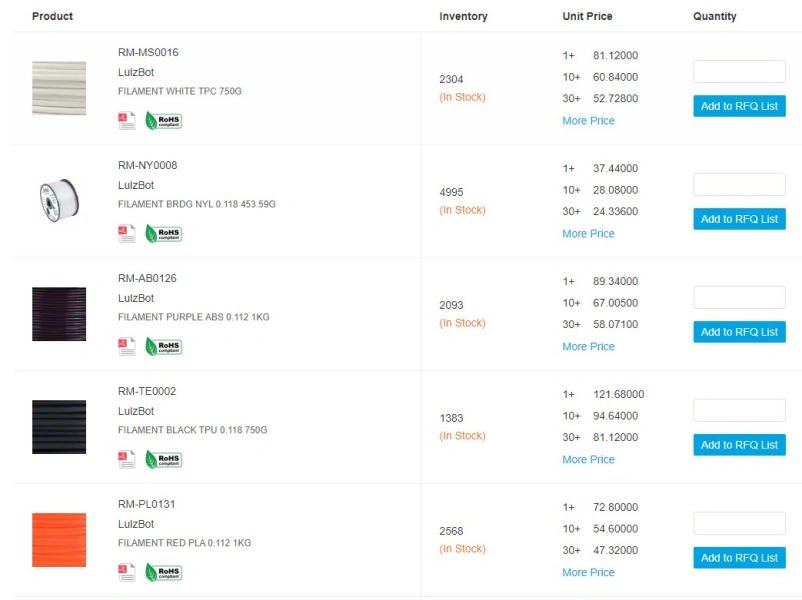
You can buy filament for 3D printers from several online shops and stores that specialize in them. Filaments like PLA, ABS, PETG, and more can be bought on sites like Chipsmall. It's easy to find the right filament for your 3D printing needs on Chipsmall because it has competitive prices, full product descriptions, and customer reviews.
Choosing the right 3D printer depends on your specific needs, budget, and the level of detail required. FDM printers are budget-friendly and great for general use, while SLA printers offer higher precision for detailed prints but come at a higher cost. Consider material expenses, maintenance, and overall value when making your decision to ensure the best balance between cost and performance

Disclaimer: The views and opinions expressed by individual authors or forum participants on this website do not represent the views and opinions of Chipsmall, nor do they represent Chipsmall's official policy.

share this blog to:


Chipsmall will provide you real-time product updates, limited-time deals.


Copyright © 2004-2026 Chipsmall.com All Rights Reserved.

Feedback
We appreciate your engagement with Chipsmall's products and services. Your opinion matters to us! Kindly take a moment to complete the form below. Your valuable feedback ensures that we consistently deliver the exceptional service you deserve. Thank you for being part of our journey towards excellence.